
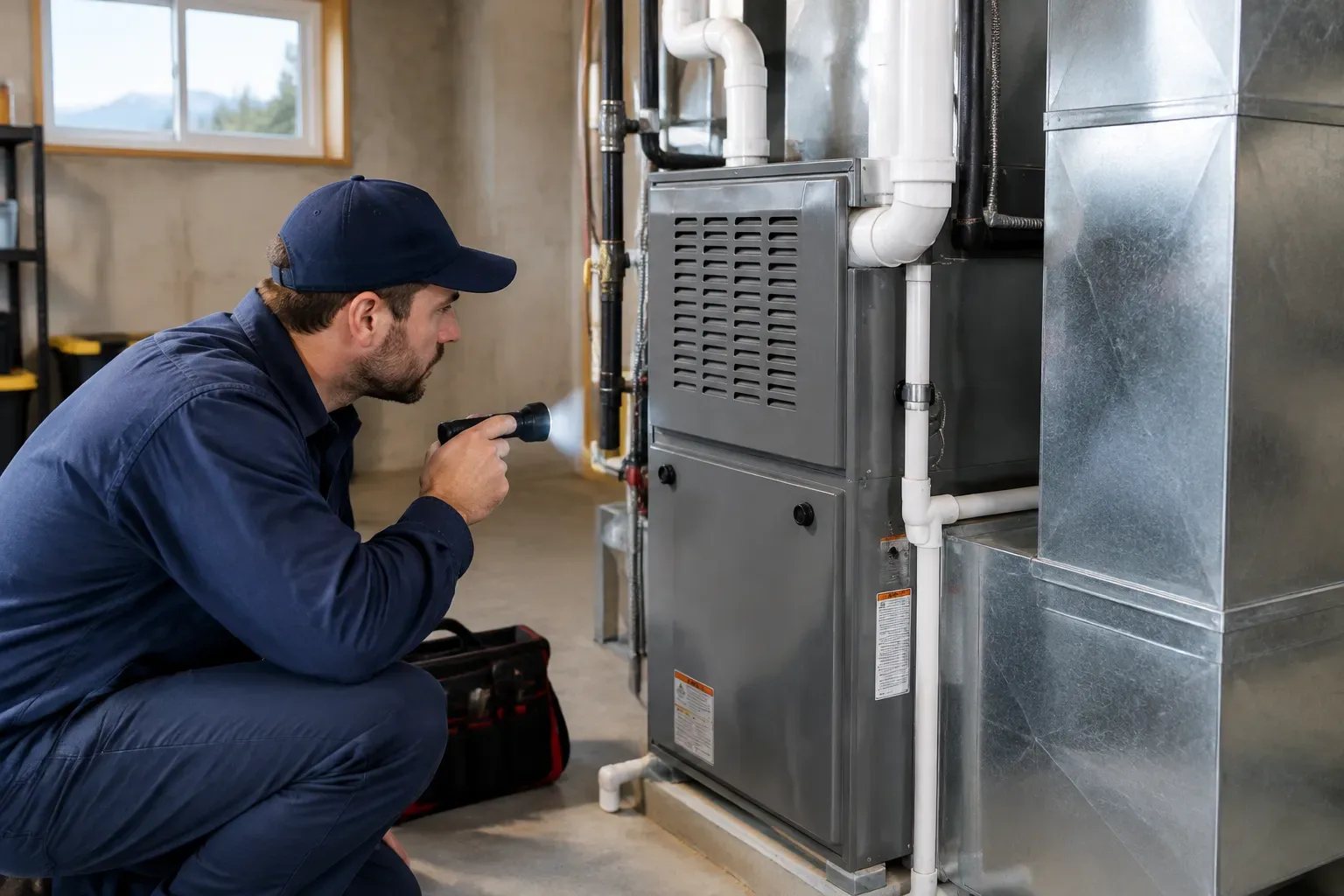
What Furnace Noises Mean You Should Schedule a Repair?
A furnace can make some normal operating sounds, but repeated, loud, worsening, or unusual noises deserve attention. Banging, grinding, screeching, repeated clicking without heat, strong buzzing, and rattling that changes with blower speed are all reasons to schedule an inspection. Shut the system down and seek urgent help if noise comes with gas odor, smoke, a burning smell, visible flame problems, or a carbon monoxide alarm.
For Bennett households, an airflow or mechanical issue can become a no-heat problem when the furnace is running regularly in cold weather. Eden Heating and Cooling serves Bennett and the Greater Denver area with practical HVAC diagnostics and repair support.
Quick Answer
Schedule a furnace repair when the sound is new, persistent, loud, getting worse, paired with poor heating or frequent cycling, or accompanied by a safety warning. A light, occasional duct pop or a single click during a normal startup sequence may not be alarming. The same sound can have several causes, though, so a noise is a symptom, not a diagnosis.
Do not try to repair electrical, combustion, ignition, or moving components yourself. Safe observations, such as noting when the sound occurs and checking that the filter is correctly installed, can help narrow the issue before a technician arrives.
Which furnace noises are normal, and which need repair?
Sound alone cannot confirm a failed part. The timing, location, severity, and whether the furnace still heats normally all matter. Use this guide to decide how soon to act.
| Sound you notice | Possible areas of concern | What to watch for | Recommended response |
|---|---|---|---|
| One mild pop at startup or shutdown | Duct expansion or contraction | It is brief and heat delivery remains normal | Monitor it if it is occasional and mild |
| Repeated loud bang or boom | Delayed ignition, duct movement, or another internal issue | The sound is forceful, repeats, or occurs before burners light | Schedule repair promptly; do not assume it is only ductwork |
| Rattling or vibration | Loose panel, fastener, vent component, blower assembly, or cabinet part | Noise changes with blower speed or gets louder | Check exterior panels are secure, then schedule service if it continues |
| Squealing or screeching | Blower motor, bearings, belt on applicable equipment, or another rotating part | Sound persists while the blower runs | Schedule repair promptly to help avoid a motor-related shutdown |
| Grinding or scraping | Damaged blower wheel, failing motor, or loose internal component | Severe metal-on-metal sound or rapidly worsening noise | Turn the system off if severe and arrange professional evaluation |
| Repeated clicking | Ignition sequence, relay, or electrical control issue | Clicking continues without ignition or ends in shutdown | Schedule service, especially if there is no heat |
| Humming or buzzing | Transformer, capacitor, relay, motor, or other electrical component | The sound is louder than usual, intermittent, or paired with performance changes | Arrange an inspection; do not open electrical panels |
| Whistling | Restrictive filter, blocked return, closed registers, duct leakage, or high static pressure | Weak airflow, overheating, or short cycling | Check filter fit and open grilles; schedule service if it persists |
When should you turn off a noisy furnace?
Turn the furnace off if the sound is severe, metallic, or rapidly worsening, especially grinding, scraping, or hard banging. Also shut it down if you notice smoke, scorching, an electrical burning smell, or flame behavior that looks abnormal through an approved viewing area.
If you smell gas, do not operate switches, light matches, use a phone inside the building, or attempt to inspect the unit. Leave the building, move to a safe location, and contact the gas utility or emergency services. Carbon monoxide is a serious indoor-air hazard associated with combustion appliances, and the EPA's carbon monoxide guidance stresses the importance of proper appliance operation, venting, and monitoring.
Why does timing matter when identifying furnace noise?
The moment a sound occurs can offer useful clues without proving the cause. A noise at startup may involve ignition, duct movement, or a relay sequence. A noise that begins only when air starts moving may point toward the blower, filter fit, return-air restriction, or cabinet vibration.
Noise at shutdown can also be different from noise during operation. A brief duct pop as metal changes temperature may be less concerning than repeated clicking followed by a shutdown. Write down whether the system produced heat, whether the blower was running, and whether the sound changed after a filter check.
Can a dirty filter make a furnace noisy?
It can contribute to noise, but it is not the explanation for every sound. Bennett's dry, windy conditions can increase dust loading on filters and internal equipment. A restricted or poorly fitted filter can make the blower work harder and may contribute to humming, whistling, rattling, overheating, or short cycling.
Replace the filter only with the correct size and type for the system. Repeatedly changing filters without addressing a continuing noise can hide the real issue, such as a blower problem, a blocked return, or excessive airflow resistance.
What can you safely check before scheduling service?
A few basic observations are useful. Avoid removing electrical covers, reaching into the cabinet, cleaning burners, adjusting gas settings, lubricating parts, or bypassing safety switches. Gas, propane, and electric furnaces have different components and hazards, so the right repair path depends on the equipment.
- Set the thermostat to heat and confirm the temperature setting is above the room temperature.
- Note exactly when the sound occurs: startup, blower operation, shutdown, or continuously.
- Confirm supply registers and return grilles are not blocked by furniture, storage, or closed covers.
- Check that the filter is the correct size, fully seated, and not visibly loaded with dust.
- Make sure accessible exterior panels are closed and secure, then record any status-light pattern only if the manufacturer's instructions make it clear how to read it.
- Share the furnace fuel type, make if known, sound description, and heating symptoms when scheduling service.
Which sounds point to a blower or airflow problem?
Rattling, whistling, humming, vibration, squealing, and scraping can all change when the blower turns on. That does not mean the blower is automatically at fault. A loose panel can rattle, a restrictive filter can whistle, and an electrical component can buzz while the blower operates.
A professional inspection can check the blower wheel, motor, mounting hardware, cabinet, airflow path, filter fit, and related electrical components. If the issue involves the broader heating and cooling equipment rather than the furnace itself, Eden also provides HVAC services for related system concerns.
Does a noisy furnace need repair or replacement?
Most noises call for diagnosis first, not an automatic replacement decision. Repair may make sense when the finding is limited to a serviceable component, loose hardware, an airflow issue, or a correctable control problem. Replacement becomes a more serious conversation when inspection identifies a major safety or combustion problem, unavailable parts, repeated significant repairs, or poor overall equipment condition.
Do not choose the largest or most involved option just because the noise is frustrating. A technician should explain the confirmed finding, the repair scope, and realistic alternatives. If a larger HVAC planning discussion also involves cooling equipment or shared system capacity, review AC installation and replacement options separately from the furnace diagnosis.
When should Bennett homeowners schedule furnace repair?
Schedule an inspection soon if the furnace is making a new or recurring sound and you depend on it for regular heating. Waiting through a cold stretch can turn a small mechanical or airflow issue into an interruption of heat. Early evaluation is especially sensible for squealing, repeated banging, clicking without ignition, persistent buzzes, or blower-related scraping.
For a furnace that is noisy but still operating, furnace repair in Bennett can begin with a clear description of the sound and system behavior. That gives the technician a better starting point than guessing from the noise alone.
What should you do next?
Take the sound seriously without assuming the worst. Record when it happens, complete only the safe checks above, and arrange an inspection if it persists or affects heating. For safety symptoms, leave troubleshooting behind and follow the appropriate emergency guidance.
Ready to discuss your project?
If your furnace is making a new or worsening noise in Bennett, Eden Heating and Cooling can help identify the next sensible step.
FAQ
Is a squealing furnace dangerous?
A squeal is not automatically an emergency, but it should not be ignored. It may involve a blower motor, bearing, belt on applicable equipment, or another rotating component. Continued operation can sometimes lead to worsening noise or a loss of airflow. If the squeal is loud, constant, or paired with weak heat, schedule an inspection promptly rather than waiting for the furnace to stop.
Why does my furnace make a loud bang when it starts?
A mild, isolated pop can come from duct movement as temperatures change. A loud bang or boom that repeats at startup needs professional attention because delayed ignition and other internal conditions are possible. The sound does not prove one cause. Avoid opening combustion areas or attempting burner cleaning, and arrange a diagnosis if the noise is forceful, new, or accompanied by heating trouble.
Is repeated furnace clicking normal?
One or a few clicks can be part of a normal control or ignition sequence. Repeated clicking without ignition, clicking followed by shutdown, or clicking combined with no heat is different. It can involve a control, ignition, safety, or electrical issue that requires inspection. Note whether the blower starts, whether warm air arrives, and how long the clicking continues before scheduling service.
Can I keep running my furnace if it is rattling?
A light rattle may be as simple as an exterior panel or fastener, but persistent rattling can also involve the cabinet, venting, blower assembly, or another internal part. Confirm accessible panels are closed and the filter is installed correctly. If the rattle changes with fan speed, grows louder, or comes with reduced heating, a furnace repair visit is the safer next step.
Why is my furnace humming or buzzing?
Humming or buzzing can come from electrical controls, a transformer, capacitor, relay, blower motor, or vibration in nearby components. Because several possibilities can produce a similar sound, do not remove electrical panels or test live wiring. A louder-than-normal buzz, intermittent buzzing, or a sound accompanied by cycling problems should be checked by an HVAC professional.
Can a furnace noise actually be caused by the air conditioner?
Sometimes the sound may come from a shared blower, ductwork, thermostat control, or another part of the overall HVAC system rather than the furnace alone. This is more likely if the noise also appears during cooling operation. If you hear the same sound while the AC runs, describe that pattern when arranging AC repair, since the operating mode helps narrow the inspection.
What should I tell a furnace technician about the noise?
Share the sound type, when it begins, how long it lasts, whether it changes with the blower, and whether the system still produces consistent heat. Mention any recent filter replacement, status-light code, odor, short cycling, weak airflow, or alarm. If known, provide the furnace brand, approximate age, and fuel type. These details help frame the visit, but inspection is still needed to confirm the cause.
Should I replace a furnace just because it is loud?
No. Noise alone is not enough to choose replacement. A repair may be appropriate if inspection finds a limited mechanical, electrical, or airflow issue. Replacement may be worth discussing after significant safety findings, major combustion-related concerns, unavailable parts, or a pattern of costly repairs. Ask for the confirmed finding and compare the practical repair and replacement paths before deciding.