
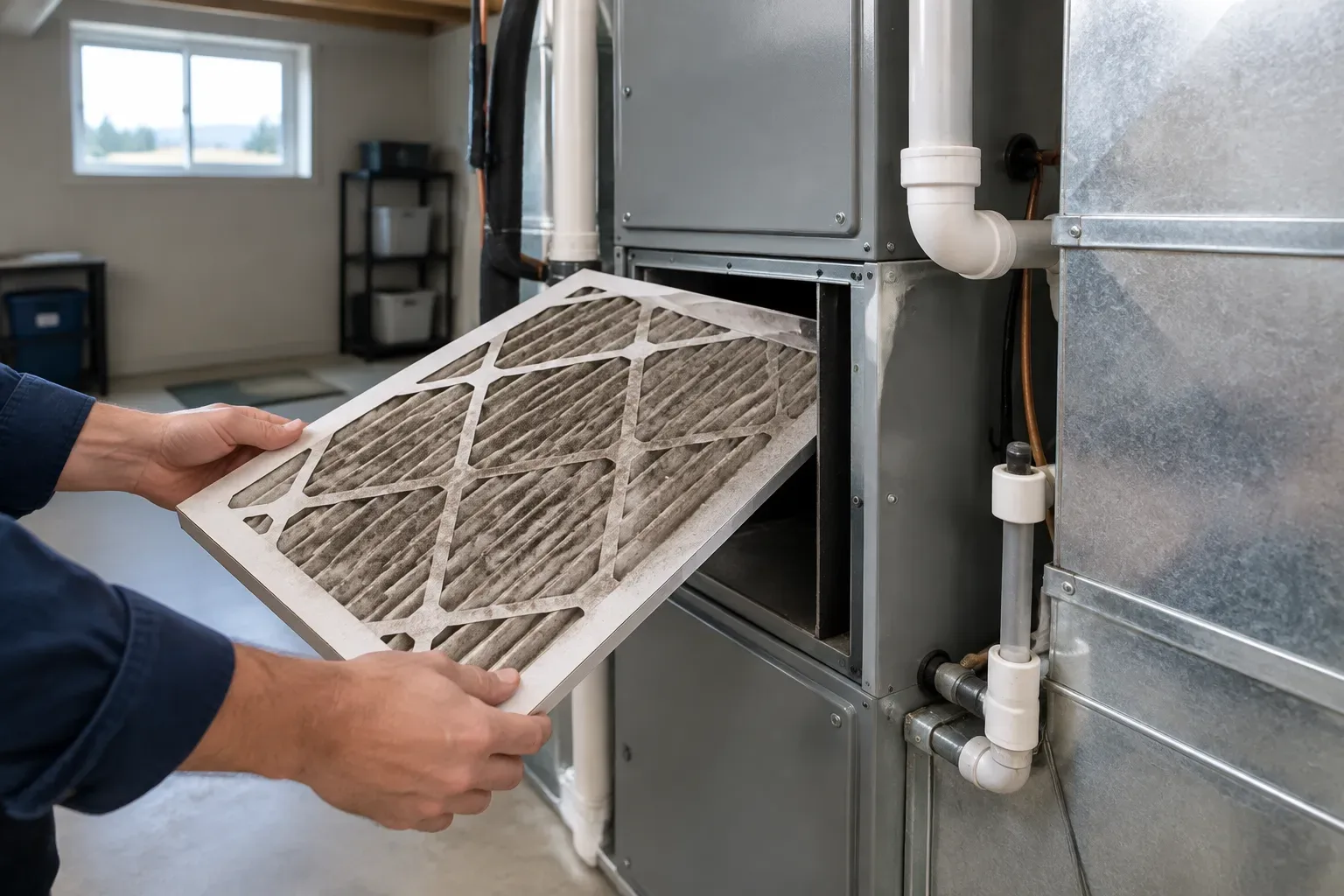
How Do Dirty Air Filters Affect Furnace Performance?
A dirty air filter can reduce furnace performance by restricting the return airflow the system needs to move heat through the house. That restriction may lead to weak airflow at registers, longer heating cycles, uneven temperatures, louder blower operation, higher energy use, overheating, or a furnace that shuts off before reaching the thermostat setting.
The filter is a common and easy-to-check cause, but it is not proof of the underlying problem. Closed registers, blocked return grilles, duct issues, thermostat faults, blower trouble, and furnace safety-control problems can create similar symptoms. For Bennett-area help with a persistent heating concern, Eden Heating and Cooling provides HVAC service in Bennett and the Greater Denver area.
Quick Answer
A clogged filter makes it harder for the blower to pull air back to the furnace. With too little air moving across the heat exchanger, the furnace can get hotter than intended and its high-limit safety switch may shut the burners down. Replacing the filter can restore normal airflow if the filter is the cause, but repeated shutdowns or short cycling need professional diagnosis.
Why does a dirty filter make a furnace overheat?
Your furnace does not create useful comfort with heat alone. It must also move enough air across the heat exchanger, the metal component that transfers heat from combustion to household air. A loaded filter adds resistance on the return-air side, so less air may cross that component.
As temperatures inside the unit rise, a high-limit switch may interrupt burner operation as a safety measure. The blower may keep running to cool the furnace, then the burners may relight later. To a resident, this can look like a furnace that starts and stops too often, never quite catches up, or blows cooler air between heating cycles.
During cold stretches in Bennett and surrounding eastern Colorado communities, a furnace may run for longer periods. That longer runtime can make restricted-airflow symptoms more obvious. It does not mean every heating problem is filter-related.
What dirty furnace filter symptoms might you notice?
The table below separates observations from possible explanations and the sensible next step. A symptom alone cannot confirm a diagnosis.
| What you notice | A dirty filter could contribute | What to do next |
|---|---|---|
| Weak airflow from several supply registers | Restricted return airflow can reduce the air the blower delivers | Check the filter and make sure return grilles and supply registers are unobstructed |
| Rooms heat unevenly | Reduced airflow can make existing duct-balancing issues more noticeable | Replace a loaded filter, then reassess room temperatures |
| Furnace runs longer than usual | Less airflow may reduce heat delivery to living areas | Check the filter, thermostat setting, and open registers |
| Furnace starts and stops repeatedly | Overheating can trigger a limit-switch shutdown | Replace the filter if needed; arrange service if cycling continues |
| Blower sounds strained or unusually loud | The blower may be working against higher resistance | Shut the system off if there is a burning or electrical odor and seek professional help |
| Furnace stops before the home reaches the set temperature | Filter restriction is one possible cause, among several safety or equipment faults | Check the filter, then schedule diagnosis if the problem remains |
A visibly gray filter is a useful clue, but appearance is not the only factor. Dust can collect within filter media before the surface looks heavily coated, and manufacturer instructions for the filter and equipment still matter.
Can a dirty filter cause furnace short cycling?
It can contribute, especially when airflow restriction causes the furnace to overheat and activate a safety limit. Short cycling means the unit runs in unusually brief, repeated cycles rather than completing a normal heating cycle. It wastes energy and adds wear because the system repeatedly starts and stops.
However, short cycling has several possible causes. An oversized furnace, thermostat placement or malfunction, blocked vents, a dirty blower assembly, venting or combustion concerns, and control faults can also be involved. If the furnace still short cycles after a correctly sized filter is installed, professional furnace repair is a safer next step than repeatedly resetting the system.
How can you check and replace a furnace filter safely?
Filter access varies. Some systems use a slot at the furnace or air handler, while others use a return-air grille inside the home. A system can have more than one filter, so check the equipment instructions or verify the full return path before assuming you found the only one.
- Turn the thermostat off, then switch off power to the furnace if the equipment instructions allow it.
- Find the filter cabinet or return grille and note the size printed on the filter frame.
- Look for heavy dust buildup, matting, damage, or a filter that is bowed inward from restriction.
- Install the correct size and type, with the airflow arrow pointing toward the furnace or air handler.
- Restore power, run a normal heating cycle, and check that airflow and operation improve.
Do not open sealed combustion sections, bypass a safety switch, or attempt gas, electrical, heat-exchanger, or control repairs yourself. The U.S. Department of Energy includes maintenance and professional attention as part of keeping heating equipment operating properly in its furnace and boiler guidance.
How often should a furnace filter be changed in Bennett, CO?
There is no single reliable calendar interval for every home. Follow the filter and furnace manufacturer instructions, then inspect more often when conditions load the filter faster. In the Bennett and Greater Denver area, dry and windy conditions can bring more airborne dust indoors, particularly near gravel roads, agricultural activity, construction, or frequently opened exterior doors. Pets, indoor smoke, renovation work, and continuous fan operation can also shorten filter life.
The right interval also depends on filter thickness, return-air capacity, household activity, and whether the system has one filter or multiple filters. Rather than guessing, write the installation date on the filter frame and check it regularly through the heating season. For broader help with maintenance, system cleaning, and air-quality concerns, review Eden's HVAC services.
Is a higher MERV filter always better for a furnace?
No. MERV is a rating that describes how effectively a filter captures particles of different sizes. A higher rating can capture more particles, but it can also create more airflow resistance if the filter cabinet and blower were not designed for it.
Use the filter type and rating recommended by the furnace manufacturer, or have a technician confirm that an upgrade is compatible with the system. Choosing a more restrictive filter without checking can recreate the same airflow problem you were trying to solve. The EPA notes that indoor air quality depends on more than one measure, including source control, ventilation, and filtration, in its indoor air quality guidance.
When does a filter replacement stop being a DIY fix?
A new filter addresses filter loading. It does not repair a failing blower motor, a dirty internal blower wheel, duct restriction or leakage, thermostat fault, cracked heat exchanger, combustion issue, or failed control component. HVAC maintenance is one part of system care, not a substitute for diagnosing an ongoing fault. ENERGY STAR's heating and cooling guidance also frames maintenance as an important part of HVAC performance.
Schedule an inspection if any of these conditions occur:
- Short cycling continues after fitting the correct filter.
- The furnace will not start, will not stay on, or cannot maintain the thermostat setting.
- You notice burning, electrical, fuel, or persistent mechanical odors.
- A carbon monoxide alarm activates, or you see soot around the furnace.
- The blower makes grinding, squealing, or repeated banging sounds.
- You are unsure which filter size, location, or MERV rating the equipment supports.
The practical takeaway is simple: replace a genuinely loaded filter correctly, then pay attention to what changes. If airflow or cycling does not return to normal, the filter may have been a contributor rather than the complete answer.
Ready to discuss your project?
If a fresh, correctly fitted filter does not stop furnace cycling or weak airflow in Bennett, Eden Heating and Cooling can help identify what is actually causing it.
FAQ
Can a dirty furnace filter make my heat bill go up?
It can. A restricted filter may force the furnace blower to work against greater resistance and may reduce how effectively heated air reaches rooms. The thermostat can then call for heat longer. Bills can also rise for other reasons, including weather, insulation gaps, duct leakage, or equipment faults, so compare performance after installing the correct filter rather than assuming the filter is the only cause.
Why is my furnace running but not blowing much air?
A loaded filter is one possible reason, particularly if airflow is weak at several registers. Also check that return grilles are not covered by furniture or rugs and that supply registers are open. If the filter is clean and airflow remains weak, the cause may involve ductwork, a blower issue, or a control problem. Continued weak airflow warrants a heating-system inspection.
Can I clean and reuse my furnace filter?
Only if it is specifically labeled washable or reusable. Most disposable pleated filters should be replaced, not vacuumed or washed. Cleaning a disposable filter can damage its media and reduce its intended performance. Check the label on the frame and use the exact dimensions listed there. If you are uncertain, bring the filter information to a service professional rather than guessing.
What happens if I put my furnace filter in backward?
The filter may not perform as intended, and airflow can be affected. Follow the arrow printed on the filter frame. It should point in the direction air travels, which is usually toward the furnace or air handler. If the filter is behind a return grille, inspect the airflow path first rather than assuming the arrow points toward the room.
Does the same air filter affect my air conditioner?
Usually, yes. Many forced-air homes use the same return filter for both heating and cooling, so a clogged filter can restrict airflow in either season. If cooling performance stays poor after a filter change, the issue may be separate from filtration. Eden's AC repair service can address ongoing cooling-operation concerns rather than treating the filter as a complete diagnosis.
Should I install a thicker filter for better filtration?
Not automatically. A thicker filter may offer more media area, but it must fit the existing cabinet and be compatible with the blower and system design. Do not modify the cabinet or force a thicker filter into place. If you want to improve filtration as part of a replacement or system update, discuss compatibility during an AC installation or replacement consultation.
Can a dirty filter damage the furnace?
Persistent restriction can place extra strain on the blower and contribute to overheating shutdowns, but only an inspection can determine whether damage has occurred. Replacing the filter promptly helps remove one avoidable source of stress. If the furnace has repeated limit-switch shutdowns, unusual sounds, or persistent operational problems, do not assume a new filter has resolved every issue.
Why does my furnace still shut off after I changed the filter?
The old filter may not have been the cause, or another airflow or safety issue may remain. Confirm the replacement is the correct size, is facing the right direction, and is not overly restrictive for the system. Then check accessible return grilles and supply registers. If shutdowns continue, a technician should evaluate components and conditions that cannot be confirmed safely from outside the unit.